
Navigating the 2026 Fannie Mae & Freddie Mac Updates: A New Standard for Condominium Financial Health
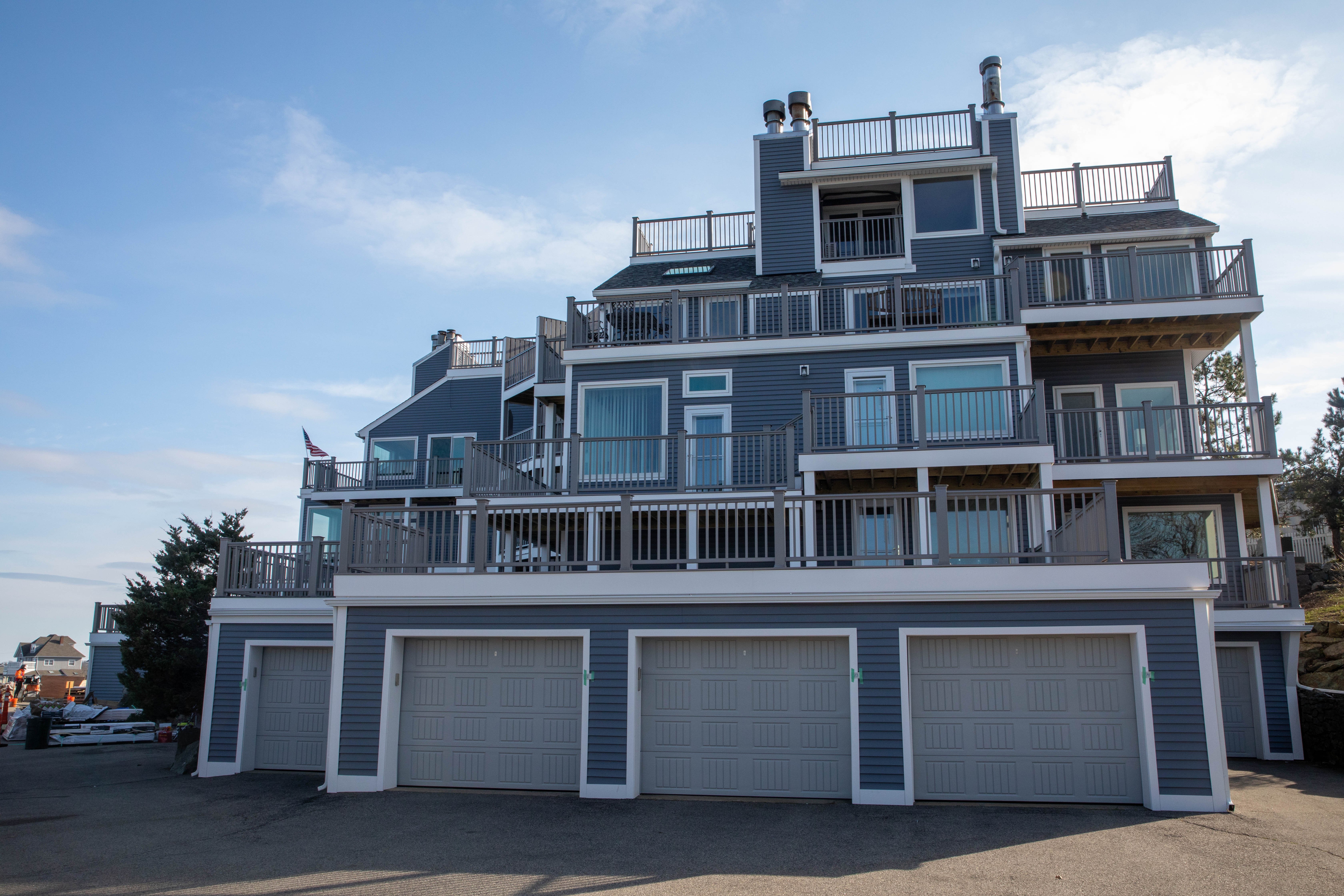
The financial expectations placed on condominium associations continue to evolve.
For years, many condominium boards balanced the immediate pressure to keep monthly assessments affordable with the long-term responsibility of maintaining aging buildings. Reserve studies often served as planning documents that helped associations estimate future repair costs and establish funding strategies over time. Communities adopted different approaches depending on their financial goals, reserve philosophy, and governing documents.
The latest updates from Fannie Mae and Freddie Mac signal that those expectations are changing.
Rather than focusing solely on whether a community has reserve funds or maintains insurance, the updated lending standards place greater emphasis on how an association plans for long-term financial stability. Reserve funding, deferred maintenance, insurance structure, and capital planning are now more closely connected than ever before.
While several of the updates provide associations with additional flexibility—particularly regarding property insurance—they also establish higher expectations for financial discipline.
The changes are intended to address growing concerns surrounding underfunded reserves, deferred maintenance, rising insurance costs, and the long-term financial resilience of condominium communities. These updates are outlined in Fannie Mae Lender Letter LL-2026-03 which explains the revised standards and implementation timeline.
For condominium boards, these updates represent more than changes to mortgage underwriting.
They influence how communities approach reserve studies, annual budgets, capital improvement planning, insurance decisions, homeowner communication, and the overall financial health of the association.
Communities that proactively align their financial planning with the physical needs of their buildings may be better positioned to preserve financing eligibility, maintain property values, and reduce the likelihood of unexpected special assessments. Communities that continue postponing capital investments or relying on outdated reserve strategies may face increasing financial challenges as lending standards continue to evolve.
KEY TAKEAWAY
The 2026 Fannie Mae and Freddie Mac updates raise expectations for reserve funding, reserve studies, project review, and financial planning while providing greater flexibility in certain insurance requirements. Together, these changes reinforce that long-term capital planning is becoming an increasingly important component of a financially healthy condominium community.
Understanding the Shift in Condominium Financial Health
The 2026 updates should not be viewed as isolated policy revisions.
Together, they represent a broader shift in how financial health is evaluated within condominium communities.
Historically, many associations measured financial success by their ability to keep assessments low while addressing repairs as they arose. Although reserve studies encouraged long-term planning, boards often had flexibility in how aggressively they chose to fund future capital projects.
The updated lending standards place greater emphasis on ensuring communities maintain adequate financial resources before major problems develop.
This shift reflects a growing recognition that physical building conditions and financial planning cannot be separated.
When replacement reserves are consistently underfunded, associations may postpone necessary maintenance, delay major repairs, or rely on special assessments when significant projects eventually become unavoidable. Deferred maintenance can increase repair costs, create additional deterioration, and ultimately affect the financial stability of both the association and individual homeowners.
The lender letter specifically notes a correlation between underfunded reserves and condominium projects requiring critical repairs. It further explains that communities with inadequate reserves often lack the resources needed to properly maintain their buildings, increasing the likelihood of unexpected assessments, homeowner financial hardship, mortgage default, and foreclosure.
For boards, this means reserve funding is no longer simply an accounting exercise.
It has become an increasingly important component of risk management.
A reserve study is no longer viewed solely as a budgeting recommendation. Instead, it serves as an important planning document that helps demonstrate whether a community is preparing responsibly for future capital obligations.
Likewise, insurance decisions should no longer be evaluated independently from reserve funding.
Choosing higher deductibles or accepting additional insurance risk may reduce premiums in the short term, but those decisions can increase the amount of reserve funding and financial planning needed to absorb future losses.
Rather than treating reserve studies, insurance, deferred maintenance, and capital projects as separate topics, the 2026 updates encourage boards to view them as interconnected parts of one long-term financial strategy.
Higher Standards for Reserve Funding
One of the most significant changes introduced by the 2026 updates involves replacement reserve funding.
For many years, condominium associations commonly relied on a minimum reserve contribution equal to approximately ten percent of the association's annual budgeted income. While many communities voluntarily contributed more than this amount, the ten-percent threshold became a widely recognized benchmark when evaluating financial health.
Under the updated standards, that benchmark increases substantially.
Fannie Mae has increased the minimum replacement reserve allocation from 10 percent to 15 percent of the association's annual budgeted income when the Full Review process applies. This represents a fifty-percent increase in the minimum reserve contribution expected under the lending standards.
For many boards, the numerical increase may appear straightforward.
The broader implication is considerably more significant.
Reserve contributions directly influence annual operating budgets, monthly assessments, long-term cash flow, and the association's ability to fund future capital improvements without relying on special assessments or deferred maintenance.
Communities that currently contribute less than the updated minimum may need to reevaluate future budgets, reserve contribution schedules, and long-term funding assumptions.
The objective is not simply to satisfy a lending requirement.
It is to strengthen the financial capacity of associations to address predictable capital expenses before those expenses become emergencies.
Reserve Studies Now Carry Greater Weight
The 2026 updates also elevate the role of the reserve study itself.
Historically, reserve studies helped boards estimate remaining useful life, anticipated replacement costs, and recommended funding strategies. Associations could often select from multiple funding methodologies depending on their financial objectives.
Under the updated guidance, reserve studies play a more direct role in demonstrating financial adequacy.
When lenders rely on a reserve study to evaluate a project's financial health, the association's budget must reflect the highest recommended reserve allocation contained within that study. The lender letter also eliminates the baseline funding method, which previously allowed reserve balances to approach—but not fall below—zero over the planning horizon.
For boards, this reinforces the importance of maintaining current reserve studies that accurately reflect building conditions, anticipated capital projects, and realistic replacement costs.
An outdated reserve study may no longer provide an appropriate foundation for long-term budgeting if the underlying assumptions no longer reflect the physical condition of the property or current construction costs.
Why Baseline Funding Is No Longer Accepted
Perhaps the most significant philosophical change within the updated standards is the elimination of baseline funding as an acceptable reserve funding methodology when a reserve study is used to demonstrate financial adequacy.
Baseline funding has historically been one of several recognized reserve funding strategies. Under this approach, an association contributes enough money to ensure that reserve cash balances approach—but never fall below—zero during the reserve study's planning horizon.
While this strategy minimizes reserve contributions in the short term, it also leaves very little financial margin if actual repair costs exceed projections, projects occur sooner than anticipated, construction costs escalate unexpectedly, or concealed conditions are discovered during construction.
The updated lending guidance no longer permits lenders to rely upon this methodology.
Instead, when a reserve study is used during project review, the association's budget must reflect the highest recommended reserve allocation identified within the study. This reinforces a more conservative approach to long-term financial planning and recognizes that reserve studies should provide sufficient flexibility to accommodate uncertainty rather than simply meeting minimum projected cash-flow needs. The official lender letter explicitly states that lenders are no longer permitted to use the baseline funding method and must instead verify that the project's budget includes the highest recommended reserve allocation amount identified within the reserve study.
For many condominium communities, this change may require a reevaluation of existing reserve studies, annual budgets, and funding assumptions.
Communities that have historically targeted minimum reserve balances may find that future contributions need to increase in order to align with the revised standards.
Reserve Funding Is Becoming a Risk Management Tool
Reserve contributions have traditionally been viewed as a budgeting decision.
Increasingly, they are becoming a risk management decision.
Every reserve dollar represents future flexibility.
Adequately funded reserves help communities respond to aging roofs, deteriorating siding, window replacement, waterproofing failures, structural repairs, and other predictable capital expenditures without relying entirely on emergency assessments or financing.
Conversely, communities that consistently underfund reserves often face difficult choices when major repairs become unavoidable.
Boards may postpone necessary work, divide projects into smaller phases than technically recommended, reduce repair scope to meet current budgets, or rely on repeated temporary repairs that increase long-term costs.
While these decisions may temporarily reduce assessment increases, they can also contribute to deferred maintenance and growing financial uncertainty.
The updated standards encourage associations to think differently.
Rather than asking, "What is the lowest reserve contribution we can make?" boards are increasingly encouraged to ask:
"What level of funding best supports the long-term health of the community?"
That shift represents one of the most important themes running throughout the 2026 updates.

Changes to Condominium Project Review
The updated standards also change how lenders evaluate condominium projects during the mortgage approval process.
For many established communities, these changes may have little day-to-day operational impact. However, they significantly affect how lenders review association finances and determine whether a project qualifies for conventional financing.
Rather than relying on streamlined review pathways, lenders will now examine more information regarding an association's financial condition, reserve funding, insurance, and project operations.
For condominium boards, this means organizational practices become increasingly important.
Accurate financial records, current reserve studies, meeting minutes, insurance documentation, and long-term capital planning all contribute to demonstrating the financial health of the association.
Retirement of the Limited Review Process
One of the most significant procedural changes is the retirement of the Limited Review process.
Historically, many established condominium communities qualified for Limited Review, allowing lenders to complete a simplified project review under certain circumstances.
Beginning with the implementation of the updated standards, that pathway is being eliminated.
Projects previously eligible for Limited Review must instead qualify through the Full Review process or, where applicable, the expanded Waiver of Project Review process. The official lender letter states that the Limited Review process is being retired for loan applications dated on or after August 3, 2026.
Although this change primarily affects lenders, its practical implications extend to condominium associations.
Boards should expect lenders to request more comprehensive project documentation and perform a more detailed review of association finances, reserve funding, insurance, and maintenance practices during mortgage transactions.
Communities with organized records and current planning documents will generally be better positioned to respond to lender requests.
Expanded Waiver Eligibility for Smaller Communities
While the retirement of Limited Review introduces additional review requirements for many associations, the updated standards also provide greater flexibility for certain smaller developments.
The Waiver of Project Review has been expanded to include qualifying condominium projects with ten or fewer units, provided the applicable eligibility requirements are satisfied. For projects containing five to ten units, additional conditions apply, including restrictions related to master associations and larger developments.
This change recognizes that smaller communities often present different administrative considerations than larger condominium associations.
Eligible projects may benefit from a simplified review process while still meeting the updated insurance and project eligibility requirements.
For qualifying boutique associations, this expansion may reduce some of the administrative burden associated with obtaining conventional financing.
Removal of Investor Concentration Limits
Another noteworthy update involves investor concentration.
Previous lending standards generally limited the percentage of investment units permitted within an established condominium project during Full Review.
The updated guidance retires the historical fifty-percent investor concentration limit for established projects reviewed under the Full Review process.
For some communities, particularly those with larger rental populations, this change may improve financing opportunities that were previously limited by investor ownership percentages.
However, the removal of investor concentration limits should not be interpreted as a reduction in overall project scrutiny.
Instead, the emphasis shifts toward broader indicators of financial stability, reserve funding, insurance adequacy, deferred maintenance, and overall project condition.
The standards increasingly evaluate whether the association demonstrates responsible long-term management rather than focusing on a single ownership metric.
What These Changes Mean for Boards
Collectively, these project review updates reinforce a consistent message.
Financial transparency matters.
Reserve planning matters.
Building stewardship matters.
Communities should anticipate greater lender interest in how their association manages long-term obligations, rather than simply whether minimum eligibility requirements have been satisfied.
For many boards, this does not necessarily require dramatic operational changes.
Instead, it encourages stronger documentation, clearer financial planning, updated reserve studies, and better communication between board members, management companies, reserve professionals, engineers, and insurance advisors.
These practices not only support financing eligibility but also improve board decision-making and homeowner confidence.
Insurance Requirements Are Becoming More Flexible—But More Strategic
The 2026 updates also introduce several important changes to property insurance requirements.
Unlike the reserve funding revisions, which generally establish higher financial expectations, many of the insurance updates provide condominium associations with greater flexibility.
These changes recognize the challenges many communities have experienced as insurance premiums have increased and coverage availability has become more limited in many regions.
However, greater flexibility should not be mistaken for reduced responsibility.
In many cases, decisions that reduce insurance premiums may also increase the financial responsibility carried by the association and individual homeowners.
As a result, boards should evaluate insurance decisions within the broader context of reserve funding, capital planning, and long-term financial risk—not simply annual premium costs.
The official lender letter explains that these insurance revisions were developed in response to industry feedback regarding rising premiums and limited insurance availability while continuing to mitigate the risks associated with inadequate protection.
One of the more notable aspects of the 2026 updates is that they do not simply increase financial expectations across every category.
While reserve funding requirements become more stringent, several insurance provisions provide condominium associations with greater flexibility.
These changes acknowledge a challenge that many communities have faced over the past several years: obtaining comprehensive insurance coverage has become increasingly difficult and increasingly expensive.
Rising premiums, higher deductibles, reduced carrier availability, and changing underwriting standards have forced many condominium boards to reconsider how they structure their insurance programs.
Rather than requiring every association to maintain increasingly expensive policies that may be difficult to obtain, the updated standards allow greater flexibility in certain areas while placing greater emphasis on understanding and managing the associated financial risk.
This represents an important shift.
Insurance should no longer be viewed solely as an annual renewal exercise focused on obtaining the lowest premium.
Instead, insurance decisions should be evaluated alongside reserve funding, capital planning, and the physical condition of the property.
A community that accepts greater insurance risk should understand how that decision affects future budgeting, reserve planning, and homeowner responsibilities.
Greater Flexibility for Master Insurance Policies
Historically, Fannie Mae and Freddie Mac required master insurance policies to satisfy several coverage provisions that could significantly increase premiums for condominium associations.
The updated standards recognize the realities of today's insurance market by allowing greater flexibility in certain policy structures.
Among the most significant changes:
- Roofs may now be insured using Actual Cash Value (ACV) coverage rather than requiring Replacement Cost Value (RCV) coverage in every situation.
- Inflation Guard endorsements are no longer mandatory.
- Associations may maintain master policy deductibles of up to $50,000 per unit under qualifying circumstances.
These changes may provide meaningful cost savings for some condominium associations, particularly those that have experienced substantial premium increases over the past several years.
However, flexibility should not be confused with reduced exposure.
Every adjustment to insurance coverage changes how financial responsibility is distributed between the association and individual homeowners.
Boards should understand not only how much premium is saved, but also how much additional financial risk is retained.
A lower premium today may result in greater out-of-pocket costs following a future loss if reserve funding and owner insurance are not properly coordinated.
Understanding the Growing Importance of HO-6 Policies
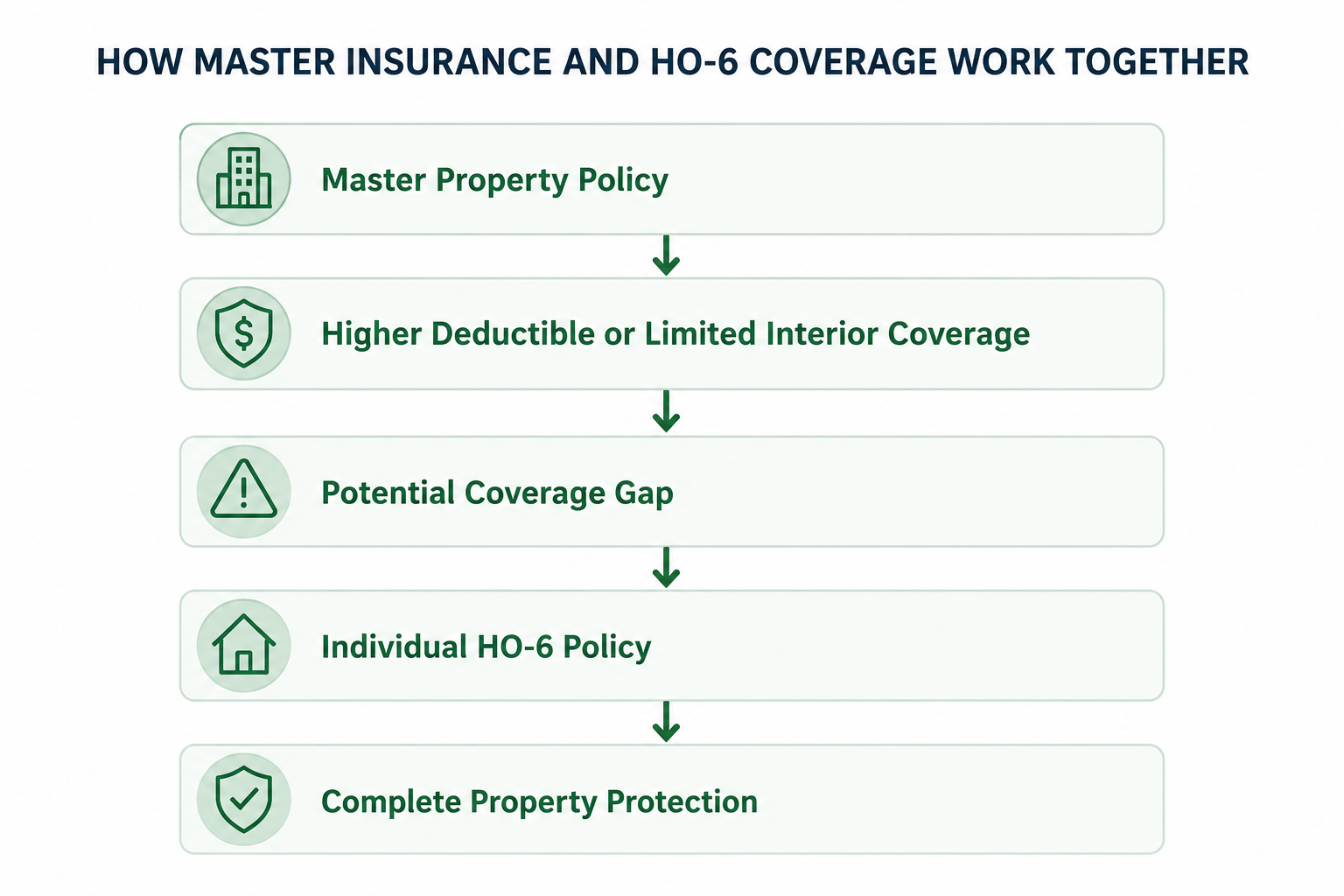
One of the practical consequences of increased insurance flexibility is that individual homeowner insurance becomes more important than ever.
If a master policy excludes portions of the interior structure or carries significant deductibles, those financial responsibilities do not simply disappear.
Instead, they often shift to individual unit owners.
The updated standards require unit owners to maintain HO-6 coverage whenever the master policy does not fully insure interior building components or when the master policy deductible creates a potential coverage gap.
In those situations, the homeowner's policy should provide sufficient protection to cover whichever is greater:
- the portion of the unit not insured by the association's master policy, or
- the applicable master policy deductible.
This coordinated approach helps ensure that damage occurring within individual units can still be repaired without creating unexpected financial hardship for homeowners.
For condominium boards, these updates highlight the importance of communicating insurance responsibilities clearly.
Many homeowners assume the association's insurance policy provides broader protection than it actually does.
Boards should work with insurance professionals to educate residents about where the association's responsibility ends and where individual coverage begins.
Clear communication today can help prevent confusion, disputes, and unexpected costs following future property losses.
Deferred Maintenance Matters More Than Ever
Although much of the discussion surrounding the 2026 updates focuses on reserve funding and insurance, the underlying objective is much broader.
The updated standards encourage condominium associations to address building needs before they become significant financial liabilities.
Deferred maintenance has long been one of the greatest challenges facing aging condominium communities.
When roofs, siding, balconies, windows, waterproofing systems, or structural components continue to deteriorate without timely repairs, the resulting damage often extends well beyond the original problem.
A relatively minor roof leak can eventually affect insulation, sheathing, framing, finishes, and interior living spaces.
A failed sealant joint may allow water intrusion that ultimately damages structural framing hidden within exterior walls.
Small maintenance issues frequently become much larger capital projects when corrective action is delayed.
These conditions also influence reserve planning.
Reserve studies estimate future capital needs based on expected service lives and anticipated replacement costs.
However, when deferred maintenance accelerates deterioration, reserve projections may no longer accurately reflect the true condition of the building.
Projects may need to occur sooner than expected, require larger scopes of work, or cost significantly more than originally anticipated.
For this reason, financial planning and physical building evaluations should support one another.
Reserve studies answer an important financial question:
How much money should we be setting aside?
Building envelope investigations answer an equally important technical question:
What work actually needs to be completed—and when?
Neither provides a complete picture on its own.
Together, they help boards make informed decisions about project timing, budgeting, and long-term investment.
Building Envelope Performance and Financial Health Are Closely Connected
At SPS, we frequently remind condominium boards that buildings function as complete systems.
Roofs, siding, windows, flashing, balconies, waterproofing, drainage components, and structural framing all interact with one another.
When one component begins to fail, the effects often extend well beyond the original location.
The same principle applies to financial planning.
Reserve funding cannot be viewed independently from building conditions.
Insurance cannot be evaluated independently from deferred maintenance.
Capital projects cannot be planned independently from reserve studies.
Each decision influences the next.
A reserve study may recommend replacing siding in eight years.
However, if an investigation identifies widespread concealed moisture damage behind that siding today, the reserve study alone cannot determine the appropriate project schedule.
Likewise, increasing reserve contributions provides valuable financial flexibility, but additional funding alone will not resolve building deterioration if project priorities are not properly identified.
Successful long-term planning requires both financial discipline and technical understanding.
Communities that integrate reserve planning with building envelope evaluations are generally better equipped to prioritize projects, phase repairs strategically, communicate with homeowners, and avoid unnecessary rework.
Rather than reacting to visible deterioration one project at a time, they develop coordinated capital improvement strategies that protect both the physical building and the long-term financial health of the association.
SPS Perspective
The 2026 updates reinforce something SPS has believed for years:
Strong reserve funding begins with understanding the building itself.
A reserve study is an essential financial planning tool, but it is not intended to serve as a comprehensive building condition assessment. Reserve studies estimate future capital needs based on available information and expected component life cycles. They generally do not involve destructive testing, extensive moisture investigations, or the level of technical analysis required to diagnose concealed building envelope conditions.
That distinction is becoming increasingly important.
As lending standards place greater emphasis on reserve funding and long-term financial preparedness, boards benefit from understanding not only how much they should save, but why specific projects should occur, when they should occur, and how those projects relate to one another.
SPS helps condominium communities connect reserve planning with real building conditions.
Our team evaluates how roofing, siding, windows, waterproofing, structural components, and other exterior systems work together so boards can prioritize projects based on actual building performance—not simply projected component age.
When reserve planning is supported by building envelope expertise, communities are often better positioned to sequence projects efficiently, reduce unnecessary rework, communicate decisions with homeowners, and invest reserve funds where they create the greatest long-term value.
Recommended Next Steps for Condominium Boards
The 2026 Fannie Mae and Freddie Mac updates provide an opportunity for boards to evaluate not only whether their community meets current lending expectations, but whether their long-term planning process is positioned for future success.
Rather than reacting only when major projects arise, boards can use these updates as a catalyst to strengthen financial planning, improve communication, and better align reserve funding with the actual needs of the property.
While every community is different, the following actions can help boards prepare for the evolving financial landscape.
Review Your Reserve Study
If your reserve study has not been updated recently, consider whether it still reflects the current condition of your property, anticipated project sequencing, and today's construction costs.
Reserve studies are most valuable when they accurately represent the community's expected capital needs. As buildings age, project priorities, useful lives, and replacement costs often change. An outdated reserve study may no longer provide an appropriate foundation for annual budgeting or long-term financial planning.
Evaluate Current Reserve Funding
Compare your current reserve contributions to both your reserve study recommendations and the updated lending standards.
Communities that currently contribute less than the revised expectations may benefit from gradually adjusting funding levels over multiple budget cycles rather than waiting until larger assessment increases become necessary.
Boards should also consider whether existing reserve balances provide sufficient flexibility to address unexpected conditions that commonly arise during major restoration projects.
Review Your Insurance Program
Meet with your insurance advisor to understand how the updated standards affect your community's existing coverage.
Topics to discuss may include:
- Master policy deductibles
- Replacement Cost versus Actual Cash Value coverage
- Interior building coverage responsibilities
- Required homeowner HO-6 policies
- Communication strategies for homeowners
Insurance decisions should be evaluated alongside reserve planning rather than independently.
Coordinate Financial Planning with Building Conditions
Reserve studies estimate future funding needs.
Building investigations identify existing conditions.
Communities often achieve better long-term outcomes when both are considered together.
If your association is planning major exterior restoration work, evaluating current building conditions before finalizing reserve funding priorities may help reduce future project changes, unexpected costs, and unnecessary rework.
Communicate Early with Homeowners
Many of the financial decisions associated with these updates eventually affect homeowners through assessments, insurance responsibilities, or future capital projects.
Boards that communicate proactively often build greater homeowner confidence than those communicating only after major projects become unavoidable.
Sharing reserve study updates, capital planning priorities, and long-term financial goals can help homeowners better understand why investments are being made and how they protect both the community and individual property values.
Frequently Asked Questions
Does every condominium association now have to contribute 15% to reserves?
Not necessarily. The updated lending standards establish a 15% reserve allocation benchmark under the applicable Full Review process. Boards should work with their reserve professional, management company, and financial advisors to understand how the updated standards apply to their specific community.
Can we still use our existing reserve study?
Possibly.
However, boards should consider whether the reserve study accurately reflects current building conditions, anticipated project timing, and today's construction costs. An outdated reserve study may no longer provide the strongest foundation for future budgeting decisions.
Does this mean monthly assessments will increase?
Every community is different.
Some associations may already meet or exceed the updated expectations, while others may need to gradually increase reserve contributions over time. The goal is not simply higher assessments, it is ensuring adequate funding for predictable future capital needs.
Why was baseline funding eliminated?
Baseline funding allowed reserve balances to approach zero during the planning period.
The updated standards encourage more conservative financial planning by requiring budgets to reflect the highest reserve funding recommendation identified within a reserve study when that study is used to demonstrate financial adequacy.
Are insurance requirements becoming stricter?
In some ways, insurance requirements have become more flexible.
The updated standards allow additional flexibility regarding certain master policy provisions, including Actual Cash Value roof coverage and higher deductibles. However, those changes also increase the importance of coordinating association insurance with individual homeowner HO-6 policies.
What is deferred maintenance?
Deferred maintenance refers to repairs or replacements that are postponed beyond the time they should reasonably occur.
Over time, deferred maintenance can increase repair costs, accelerate deterioration, and place additional financial pressure on both the association and homeowners.
How do reserve studies and building investigations work together?
Reserve studies help estimate future funding needs.
Building investigations evaluate existing conditions and identify underlying causes of deterioration.
Together, they help boards prioritize projects, sequence repairs appropriately, and make more informed capital planning decisions.
Why does this matter if our community is not refinancing?
Even when an association is not directly involved in financing, lending standards can influence future unit sales, refinancing opportunities, property values, and buyer confidence.
Maintaining strong financial planning practices benefits both current and future owners.
Condominium Board Planning Checklist
Immediate Priorities
☐ Review the association's most recent reserve study.
☐ Compare current reserve funding with updated lending expectations.
☐ Schedule a discussion with your reserve professional and financial advisor.
☐ Review master insurance deductibles and coverage structure.
Next Budget Cycle
☐ Evaluate whether reserve contributions should be adjusted.
☐ Review anticipated capital projects over the next five to ten years.
☐ Update long-term funding assumptions.
☐ Communicate upcoming financial priorities with homeowners.
Long-Term Planning
☐ Keep reserve studies current.
☐ Coordinate reserve planning with building envelope evaluations.
☐ Prioritize projects before deferred maintenance accelerates.
☐ Review insurance annually alongside reserve planning.
☐ Continue educating homeowners on the association's long-term financial strategy.
Conclusion
The 2026 Fannie Mae and Freddie Mac updates represent more than revisions to lending guidance.
They reflect a broader shift toward proactive financial management, responsible reserve funding, and long-term building stewardship.
While many associations will need to adjust reserve funding strategies or reevaluate insurance decisions, the underlying objective remains straightforward: helping condominium communities better prepare for the inevitable costs of owning and maintaining complex buildings.
For boards, these updates provide an opportunity to move beyond reactive budgeting and toward a more comprehensive approach to capital planning.
Communities that align reserve studies with actual building conditions, maintain open communication with homeowners, and make informed long-term investments are often better positioned to preserve financing opportunities, reduce financial surprises, and protect property values over time.
At SPS, we believe successful capital planning begins with understanding the building itself.
By combining building envelope expertise with practical planning guidance, we help condominium communities make confident decisions that support both the physical performance of their buildings and the long-term financial health of their associations.
For a comprehensive, itemized list of all federal compliance updates:
Boards should reference the official Fannie Mae Lender Letter LL-2026-03.
If you are looking for the key takeaways and actionable steps for your community, view our summarized guide here.
For professional guidance on navigating structural assessments and long-term capital improvement planning for your property's building envelope, contact the team at SPS.
Comments